
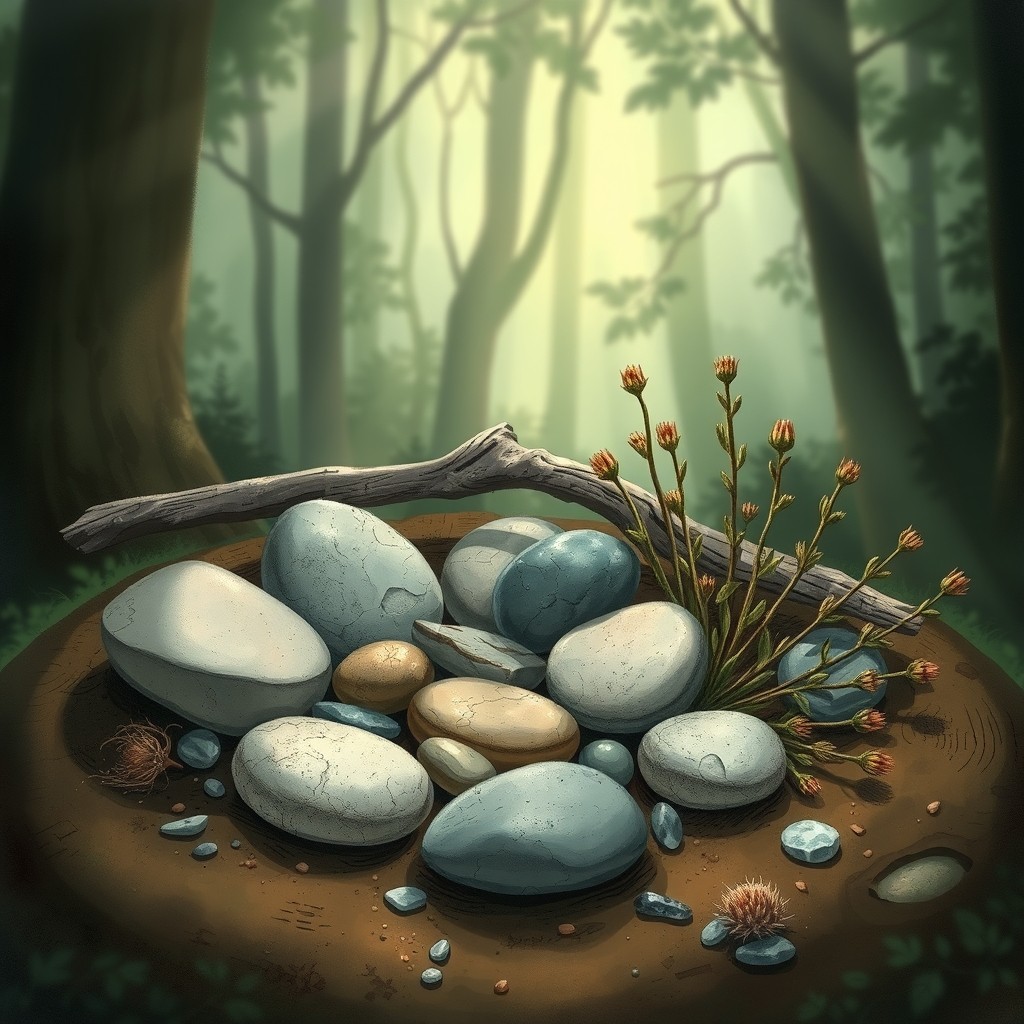
Across countless spiritual paths and throughout history, humanity has instinctively revered physical objects, places, or even natural elements that seem to hold a deeper significance. For many Pagans, this resonates deeply with our understanding that the divine is immanent, present within the very fabric of the world around us. Whether it’s a gnarled ancient tree, a crystal found on a forest path, or a river-smoothed stone, these tangible links serve as anchors, reminding us of the vast web of life and the sacred energy that permeates everything. It speaks to a primal human need to connect with the unseen through the seen, honoring the wisdom embedded in the Earth itself and the stories it holds.
From an animistic perspective, the idea that objects can possess their own spirit or hold the resonance of energies is a cornerstone of many traditions. These aren’t worshipped as idols but are honored as focal points—conduits for ancestral memory, reminders of a deity’s presence, or simply sources of profound personal comfort and inspiration. An heirloom passed down through generations might carry the blessings and resilience of those who came before. A piece of wood gathered from a sacred grove can become a powerful touchstone for meditation, linking us back to the vibrant heartbeat of nature and the timeless cycle of creation and dissolution.
Ultimately, the reverence for such items stems from a universal human desire to connect with something greater than ourselves, to feel grounded in our spiritual journey. For Pagans, these sacred connections are often personal and intuitive, guided by our own resonance with the natural world and the spirits that dwell within it. They invite us to slow down, to listen, and to find the extraordinary in the seemingly ordinary, recognizing that every whisper of the wind, every stone, and every living thing can hold an echo of the divine.
Source: original article · prepared with AI assistance for a contemporary Pagan audience.